
Blog
The importance of homegrown feed in New Zealand
Taking action on-farm: improving feed efficiencies to maintain milk production during summer
26 Feb 2026
2 min
In our 'Taking Action On Farm' series, we explore how Fonterra farmers are working to reduce emissions intensity on their farms. These efforts are a vital part of the Co-op’s work to reduce emissions across our value chain, ultimately bringing our sustainability performance through to every NZMPTM product you purchase as well as delivering the high-quality dairy ingredients you expect.
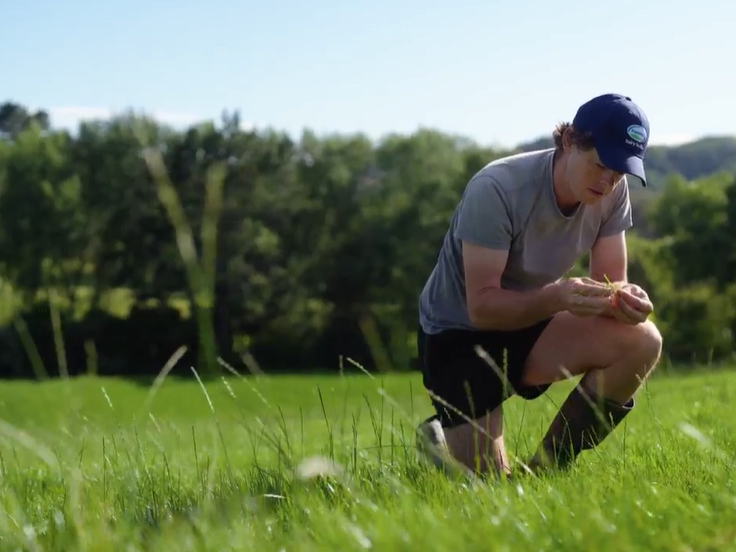
Last year, we spoke with one of our farmer shareholders, Sam Waugh, who has been taking a number of actions on his farm to help improve efficiencies including herd and pasture management. On Sam’s farm, his cows were 97% grass-fed during the 2024/25 season, and they graze on pastures which are predominantly made up of ryegrass and clover, and more recently, forage crops. Using his Farm Insights Report, Sam had identified an opportunity to improve feed efficiencies by growing crops to support the herd’s nutrition and milk production during the dry summer months and maintain milk production.
Summer is a critical period where milk production can be impacted due to hot dry conditions affecting pasture growth. Sam and his team have started growing chicory which has a long taproot, this means when rainfall is scarce it can access moisture and nutrients further below the soil surface as well as provide nutritious high-energy feed for the herd.
Hear more about how Sam improved homegrown feed on his farm in the video below:
Our biggest opportunity to reduce farming emissions right now is by driving greater efficiencies through good practice farming. This includes improving herd performance, optimising nutrients from fertiliser, minimising energy use on-farms, and delivering the optimal nutrition to cows. FIR’s are just one of the many ways Fonterra is helping farmers identify opportunities for efficiency and improvement on farm.

