
New Zealand is our home, we believe it's one of the best places in the world to farm grass-fed dairy.
New Zealand farmers are amongst the world's most emissions efficient dairy producers1, but there is more work to do. We are working towards emissions reduction targets for 2030 with an ambition to be net zero by 2050, bringing our sustainability progress through to every NZMP product you purchase.
It starts with our grass-fed difference
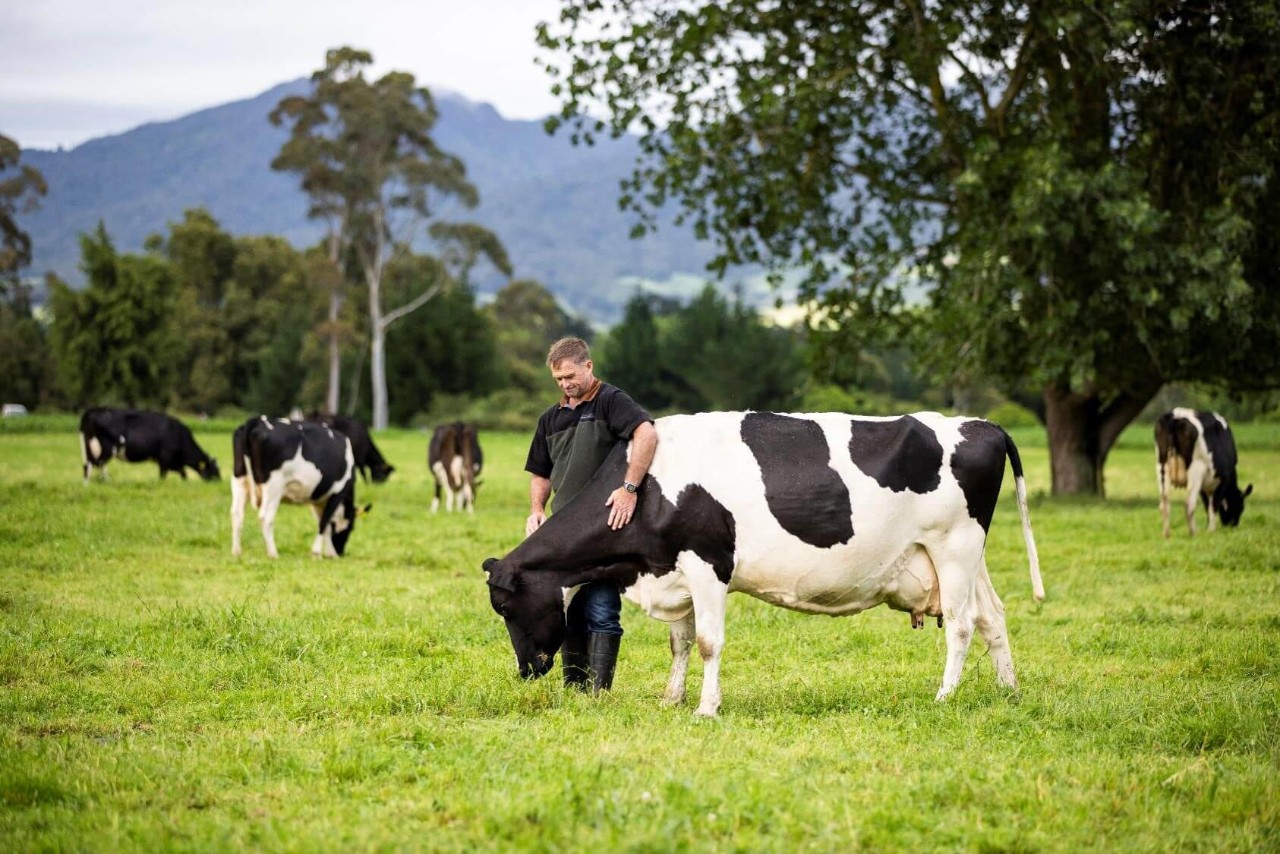
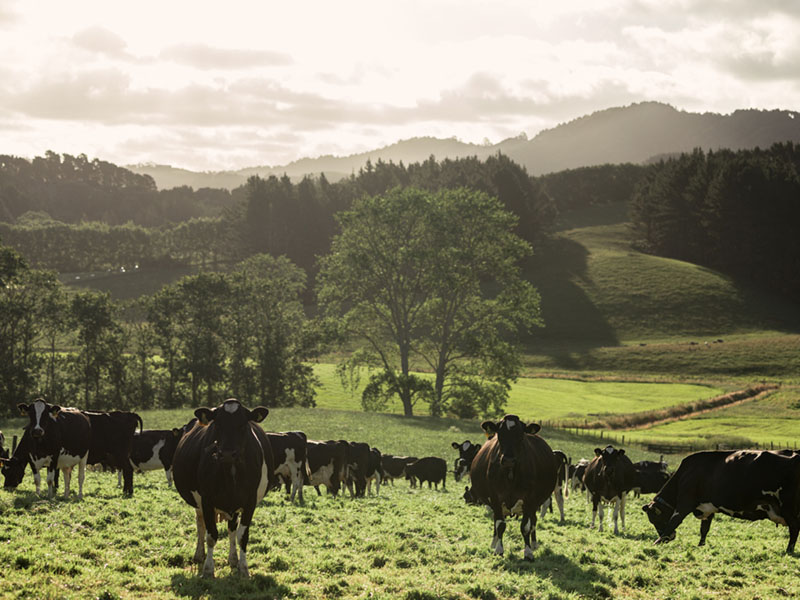
Our cows spend over 350 days a year grazing on pasture, thats more time than anywhere else in the world*, they make the most of natural sunlight and fresh air and have an average diet of 96% grass**.
We have a natural advantage
New Zealand farmers use regenerative agriculture farming practices, supporting the resiliance of intergenerational farming businesses. These practices also have the potential to help us achieve our climate ambitions and support the future of the farming environments we depend on.
Backed by over 10 years of farm level data
Fonterra farmers have been recording and submitting data about their farming operations for over a decade. Our data systems enable us to provide insights to help our farmer-owners improve their practices and climate impact. Our data also provides you with assurance about the practices and improvements that we’re making.
Creating goodness for generations
The Fonterra Sustainability Roadmap is the path that helps us work towards our ambitions to be net zero in 2050 and contribute to a nature positive2 future. It's more than just climate targets, we address climate adaptation, nature and animal wellbeing, to help build resilient farming businesses and a stronger Co-operative.
1 Mazzetto, A. M., Falconer, S., & Ledgard, S. (2022). Mapping the carbon footprint of milk production from cattle: A systematic review. Journal of Dairy Science, 105(12), 9713-9725. https://www.journalofdairyscience.org/article/S0022-0302(22)00585-9/fulltext
2 A global societal goal defined as to halt and reverse nature loss by 2030 on a 2020 baseline and achieve full recovery by 2050. To put this more simply, it means ensuring more nature in the world in 2030 than in 2020 and continued recovery after that. Find out more about the Nature Positive Initiative here.
*Of the top 15 dairy exporting countries (based on annual dairy product export volumes in 2023 and including New Zealand), only Ireland operates a similar pasture-based model to New Zealand. Data in the study, O'Brien et al. 2018, shows that Irish dairy cows have access to pasture, on average, 255 days per year. The Bord Bia (Irish Food Board) 2023 statistics show an average of 240 days on pasture. Fonterra’s annual data shows that on average, in New Zealand, our farmers' cows spend more than 350 days grazing outside on pasture. Visit NZMP.com/grass-fed for more information.
**96% is an average calculated on an ‘as consumed’ basis. The average is measured over our previous three seasons data. Grass-fed means cows mainly grazing on grass and crops in paddocks where they roam. Visit NZMP.com/grass-fed for more information.


